 Greek
 English
 Czech
 Danish
 Finnish
 French
 German
 Italian
 Norwegian
 Romanian
 Spanish
10 Things Your Friends May Not Know About Drugs (Part 5)
Myth: “Alcohol is not really a drug.” True or false? False. Because beer, wine, and spirits are sold legally and woven into social celebrations, people often talk about “drugs and alcohol” as if they were two separate categories. Biologically, alcohol is one of the most widely used—and potent—drugs in the world.
Why Legal Does Not Mean Non-Drug
A substance is defined by what it does to the body and nervous system, not by where it is sold. In the Narconon educational series, presenter Bobby Wiggins highlights a sobering benchmark from the United States justice system: over half (55%) of prison inmates were incarcerated in connection with an alcohol-related offense.
Like every other drug, alcohol is taken initially to relieve an unwanted condition—such as boredom, social tension, or physical soreness after a long shift at work.
How Alcohol Numbs the Central Nervous System
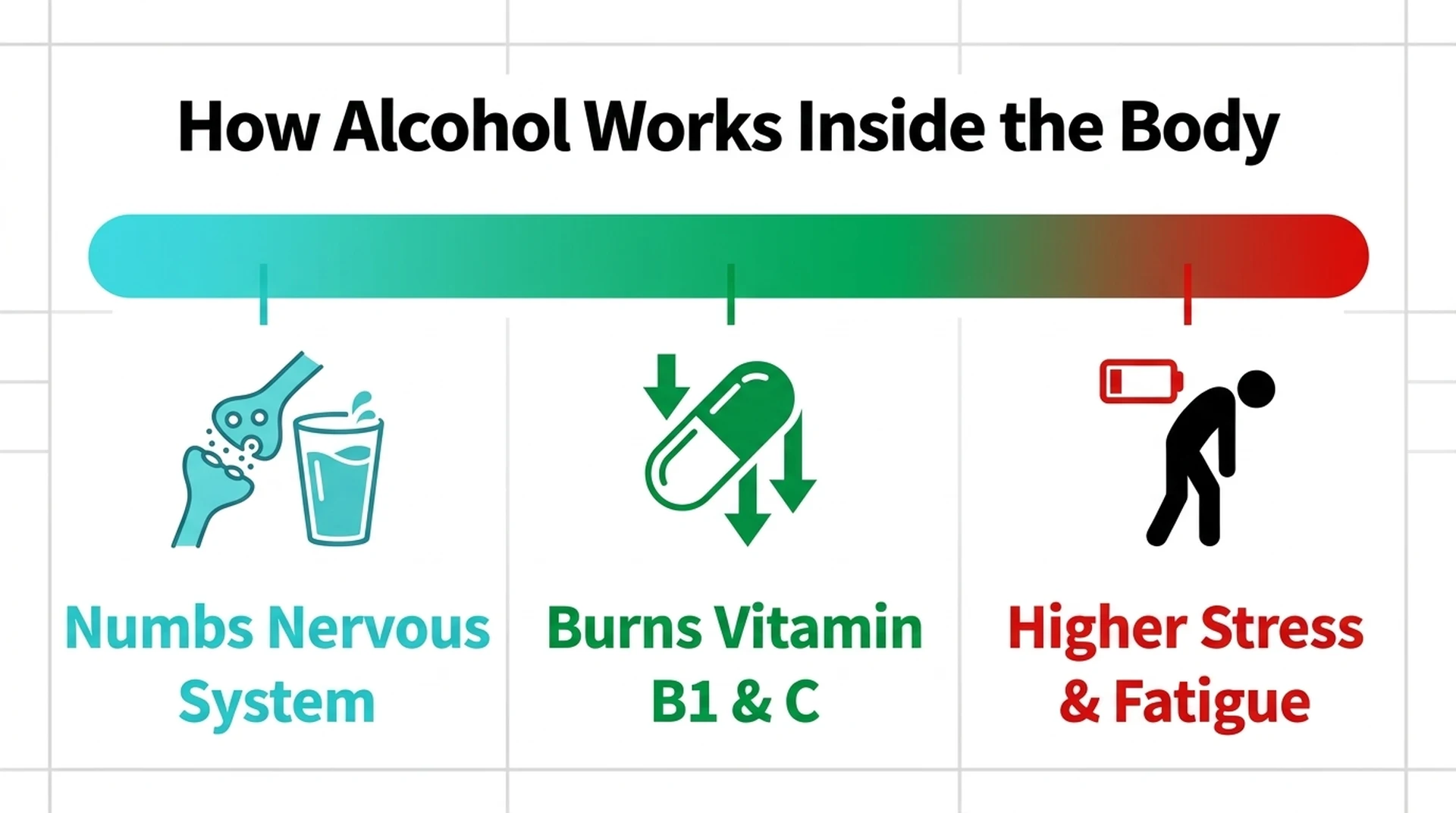
Suppose someone finishes a demanding workday feeling sore, tired, or restless and stops at a bar for a few beers. Within minutes, alcohol depresses and numbs the central nervous system.
Literally “feeling no pain,” they loosen up, laugh, and feel temporary relief. Yet beneath the surface, the body is working overtime to metabolize ethanol—burning through critical nutrients at a rapid pace.
- Vitamin B1 (Thiamine): Rapidly depleted by alcohol; essential for healthy brain tissue and for keeping a person resilient against everyday stress.
- Vitamin C: Consumed as the body counteracts toxic oxidative stress.
- Vitamin B-complex: Drained during alcohol metabolism, directly reducing natural daytime energy.
Why Stress Builds Faster After Drinking
Here is the irony of drinking to relax: vitamin B1 helps prevent a person from feeling stressed in the first place. When alcohol burns up B1, C, and B-complex reserves, the person wakes up the next day in slightly worse neurological and nutritional shape.
They may not notice the small drop after a single evening, so they drink again the next time work feels exhausting—experiencing a brief numb lift followed by an even lower baseline of energy and stress tolerance.
Περαιτέρω πόροι
- 🎬 Watch all animated episodes: Βιβλιοθήκη βίντεο του Νάρκωνον.
- 🍺 Complete alcohol resource page: Alcohol: What You Need to Know.
- 🌍 Learn more about drug rehabilitation and prevention at Νάρκωνον Ευρώπης.
10 Things Your Friends May Not Know About Drugs: Complete Series
- Part 1: What is a Drug?
- Part 2: What Are the Effects of Drugs on the Mind?
- Part 3: Why Do People Take Drugs?
- Part 4: What Is Addiction? Why Most Drugs Are Habit-Forming
- Part 5: Is Alcohol a Drug? How Alcohol Works on the Body (Current Episode)
- Part 6: Is Marijuana Harmful? The Hidden Magnesium Trap
- Part 7: Is Ecstasy Safer Than Other Drugs? The Truth About MDMA
- Part 8: Do Drugs Increase Creativity? Emotions vs. Artificial Highs
- Part 9: Do Drugs Improve Your Senses? How the Nervous System Reacts
- Part 10: How Long Do Drugs Stay in the Body? Fat-Soluble Residues Explained
ΣΥΧΝΈΣ ΕΡΩΤΉΣΕΙΣ
Q1: Is alcohol classified as a drug?
Yes. Alcohol is a central nervous system depressant drug that alters brain chemistry, coordination, judgment, and physical functions.
Q2: How does alcohol create a feeling of relaxation?
Alcohol numbs communication across the central nervous system, temporarily dulling physical aches and mental tension.
Q3: Why is vitamin B1 depletion from alcohol so important?
Vitamin B1 (thiamine) supports brain tissue and helps regulate stress; burning it up leaves a person more irritable, tired, and stress-prone once alcohol wears off.
Q4: What other vitamins does alcohol deplete?
Along with vitamin B1, alcohol rapidly drains vitamin C and B-complex vitamins that the body relies on for natural energy.
Q5: Can regular social drinking still lower energy over time?
Yes. Repeatedly numbing the nervous system while depleting B-vitamins gradually lowers baseline energy and stress resilience.