 Romanian
 English
 Czech
 Danish
 Finnish
 French
 Greek
 German
 Italian
 Norwegian
 Spanish
10 Things Your Friends May Not Know About Drugs (Part 10)
Myth: “Drugs stay in the body for only a short time—a few hours or a few days.” True or false? False. In the tenth and final episode of the series, we examine one of the most important discoveries in addiction recovery: why microscopic drug residues can remain trapped in fatty tissue long after the high is gone—and what can be done about it.
Water-Soluble vs. Fat-Soluble Substances
If you stir frozen orange juice concentrate into a pitcher of water, it dissolves completely because it is water-soluble. Water-soluble compounds flush out of the body relatively quickly.
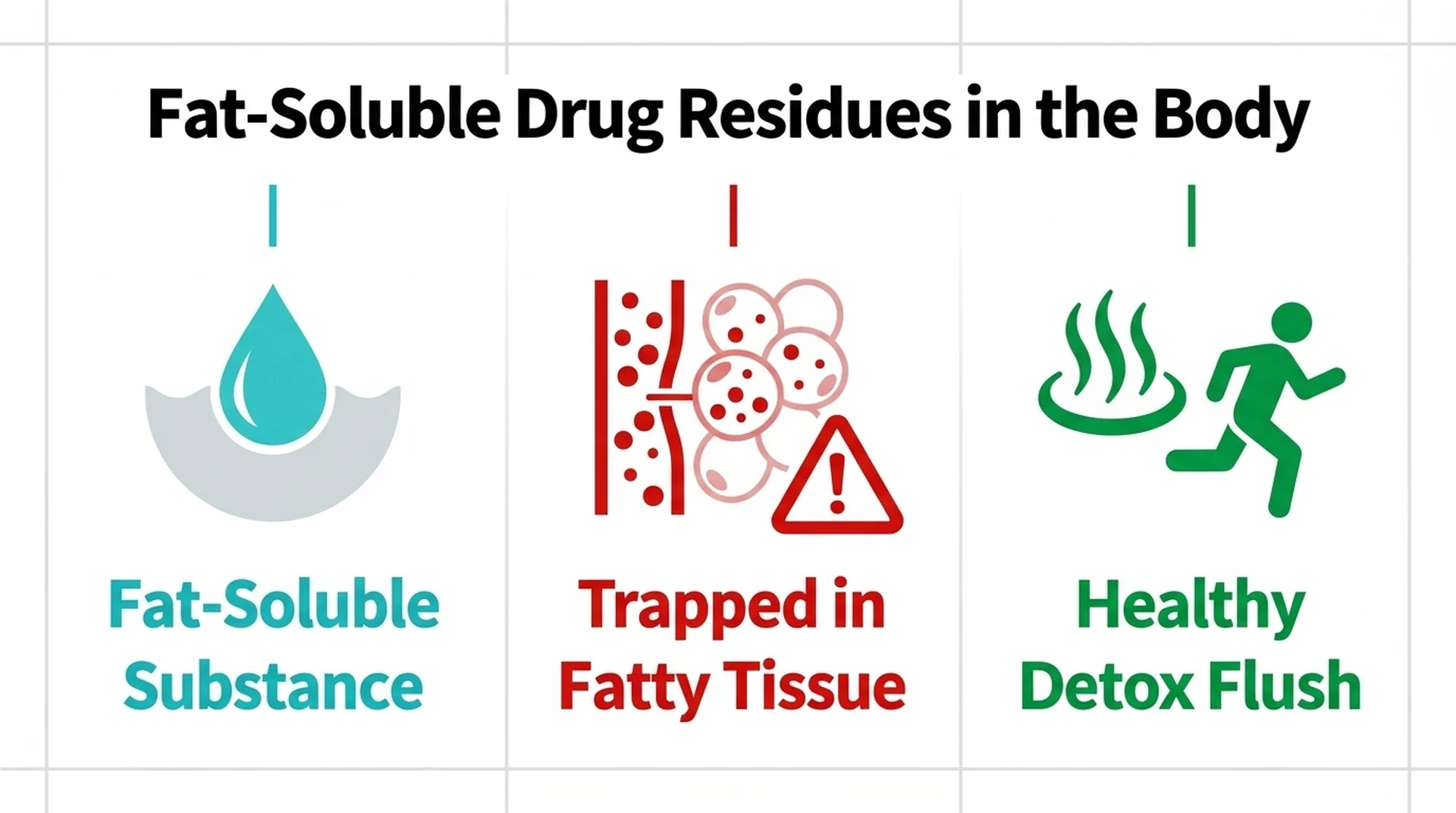
Most psychoactive drugs—including THC (tetrahydrocannabinol) in marijuana, LSD, heroin, cocaine, and many sedatives and stimulants—are fat-soluble (lipophilic). Like oil poured into water, you could stir them endlessly and they will never truly mix with water; instead, they bind strongly to fat.
How Fatty Tissue Draws Residues Like a Magnet
No matter how a substance is taken—smoked, swallowed as a pill, snorted, or injected—it enters the bloodstream. Right alongside blood vessels throughout the body sits fatty tissue.
As fat-soluble drug molecules circulate through the blood, nearby fat tissue attracts and absorbs tiny microscopic residues almost like a magnet. Over years of substance use, trace residues accumulate in fatty stores while continuing to tax the body’s vitamin and mineral reserves.
- Bloodstream entry: Every route of administration delivers active molecules into circulation.
- Lipid storage: Fat cells adjacent to capillaries draw in and hold fat-soluble compounds.
- Lingering impact: Stored residues contribute to ongoing nutrient depletion, sluggishness, and sudden physical cravings when fat is mobilized during stress or exercise.
Flushing Old Residues and Building a Drug-Free Life
In the presentation, educator Bobby Wiggins shares his own recovery journey after 16 years of heavy poly-drug and alcohol addiction. Even after running four to six miles daily, eating clean food, taking vitamins, and living completely drug-free for three and a half years, entering Narconon’s supervised sauna sweat-out regimen released stored drug residues that had remained locked in his tissues.
While retention varies from person to person, drugs can linger far longer than standard urine-test windows suggest. The encouraging news is that a person does not have to stay trapped: combining thorough physical recovery with practical life skills allows individuals to reclaim clear thinking, genuine energy, and a lasting drug-free future.
Resurse suplimentare
- 🎬 Watch all animated episodes: Biblioteca video Narconon.
- 📘 Need help for a family member or friend? Read: 14 Rules for Helping an Addicted Loved One.
- 📞 Speak confidentially with our team: Contactați Narconon Europe.
- 🌍 Learn more about drug rehabilitation and prevention at Narconon Europa.
10 Things Your Friends May Not Know About Drugs: Complete Series
- Part 1: What is a Drug?
- Part 2: What Are the Effects of Drugs on the Mind?
- Part 3: Why Do People Take Drugs?
- Part 4: What Is Addiction? Why Most Drugs Are Habit-Forming
- Part 5: Is Alcohol a Drug? How Alcohol Works on the Body
- Part 6: Is Marijuana Harmful? The Hidden Magnesium Trap
- Part 7: Is Ecstasy Safer Than Other Drugs? The Truth About MDMA
- Part 8: Do Drugs Increase Creativity? Emotions vs. Artificial Highs
- Part 9: Do Drugs Improve Your Senses? How the Nervous System Reacts
- Part 10: How Long Do Drugs Stay in the Body? Fat-Soluble Residues Explained (Current Episode)
ÎNTREBĂRI FRECVENTE
Q1: Do drugs completely leave the body as soon as the high wears off?
No. While active intoxication fades within hours, fat-soluble drug metabolites and residues can remain stored in fatty tissues much longer.
Q2: What does it mean that THC and other drugs are fat-soluble?
Fat-soluble (lipophilic) substances do not dissolve in water; instead, they bind to lipids and are drawn from the bloodstream into nearby fat cells.
Q3: Why do stored drug residues matter for health and recovery?
Circulating and mobilized residues continue to tax vitamin and mineral reserves and can re-trigger physical sensations or cravings during stress.
Q4: Does how a drug is taken change whether it enters the bloodstream?
No. Whether smoked, swallowed, inhaled, or injected, psychoactive substances enter the bloodstream and pass alongside fatty tissues.
Q5: Where can families find real help for drug or alcohol addiction?
You can contact Narconon Europe directly via our Contact page or explore our free 14 Rules family guide and Video Library.