 Italian
 English
 Czech
 Danish
 Finnish
 French
 Greek
 German
 Norwegian
 Romanian
 Spanish
10 Things Your Friends May Not Know About Drugs (Part 3)
Myth: “No one really knows what causes people to take drugs.” True or false? False. People do not wake up hoping to ruin their health or worry their families. Every single person who takes a drug—whether legal or illegal—does so for one specific, understandable reason: to relieve an unwanted condition.
Relieving an Unwanted Condition
When you look past stereotypes, substance use always starts as an attempted solution to something uncomfortable. That unwanted condition can be physical, emotional, or purely situational:
- Physical pain: Someone takes a painkiller because their body hurts and they want the ache to stop.
- Stress or nervousness: Someone smokes marijuana or pours a drink to unwind—which means tension or anxiety was already present underneath.
- Everyday boredom: One of the most common triggers of all, especially among teens and young adults.
The Boredom Factor: How First Use Actually Happens
Imagine two friends hanging around on an empty afternoon: “What do you want to do today?” “I don’t know—what do you want to do?” Along comes someone offering a substance: “Here, check this out.”
When they try it, the drug produces a sudden shift in sensation. For a short window of time, it genuinely appears to work: the boredom, awkwardness, or tension is temporarily lifted.
The Hidden Catch When the Drug Wears Off
If a substance simply removed stress or boredom with no side effects, there would be no trap. The problem is what happens inside the body while the drug is active.
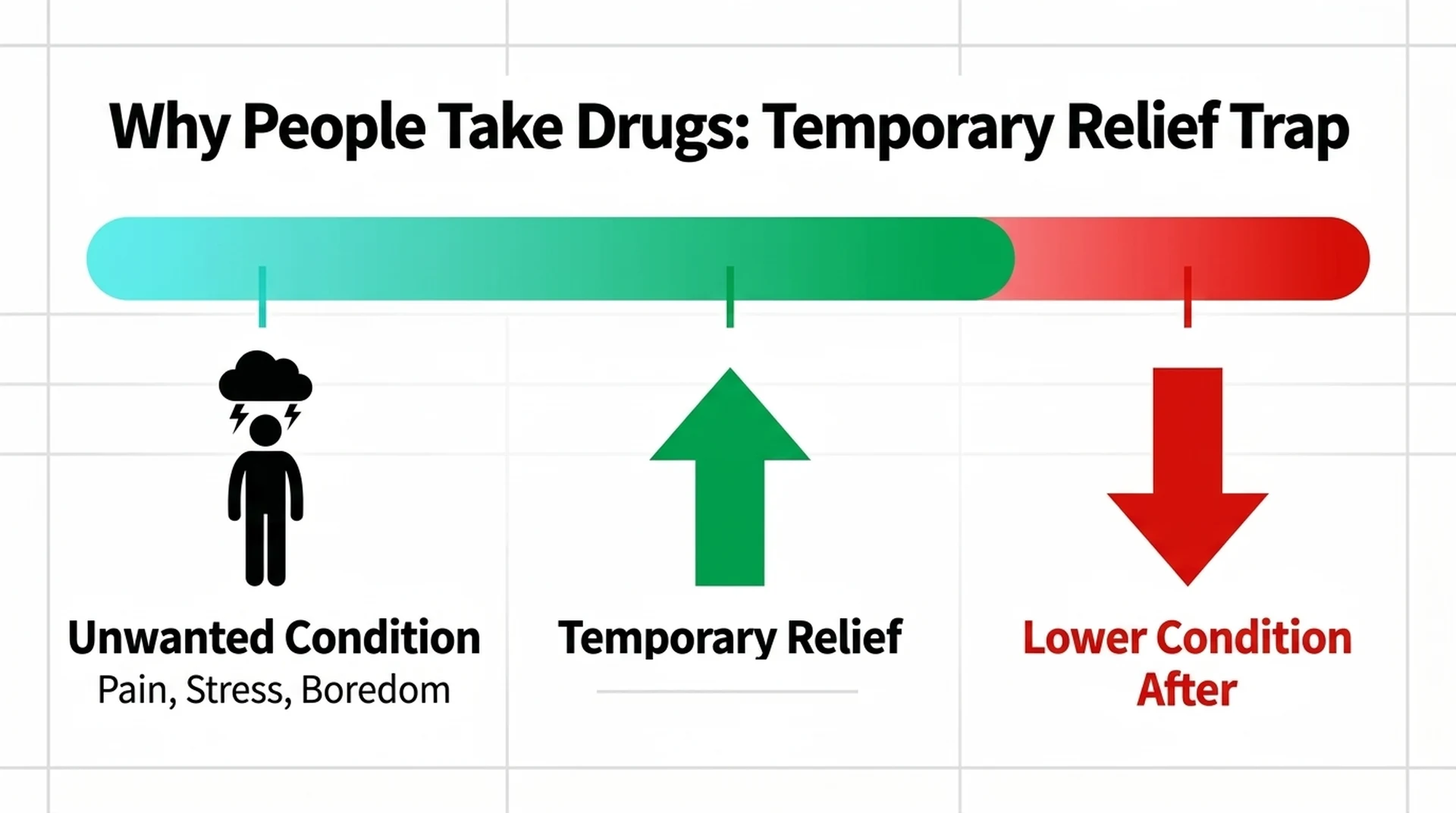
Processing toxins burns up internal reserves and puts wear on the nervous system. As a result, when the substance wears off, the person does not return to their original starting point—they come down in a slightly lower condition than before.
- Before use: Mild boredom, stress, or discomfort.
- During the high: Temporary artificial relief.
- After comedown: Slightly more tired, flat, or restless—making the substance look even more appealing next time.
Ulteriori risorse
- 🎬 Watch all animated episodes: Videoteca Narconon.
- 📘 Practical family guide: 14 Rules for Helping an Addicted Loved One.
- 💊 Learn more about painkiller risks: Painkillers: What You Need to Know.
- 🌍 Learn more about drug rehabilitation and prevention at Narconon Europa.
10 Things Your Friends May Not Know About Drugs: Complete Series
- Part 1: What is a Drug?
- Part 2: What Are the Effects of Drugs on the Mind?
- Part 3: Why Do People Take Drugs? (Current Episode)
- Part 4: What Is Addiction? Why Most Drugs Are Habit-Forming
- Part 5: Is Alcohol a Drug? How Alcohol Works on the Body
- Part 6: Is Marijuana Harmful? The Hidden Magnesium Trap
- Part 7: Is Ecstasy Safer Than Other Drugs? The Truth About MDMA
- Part 8: Do Drugs Increase Creativity? Emotions vs. Artificial Highs
- Part 9: Do Drugs Improve Your Senses? How the Nervous System Reacts
- Part 10: How Long Do Drugs Stay in the Body? Fat-Soluble Residues Explained
FAQ
Q1: Why do people start taking drugs in the first place?
People take drugs to temporarily relieve an unwanted condition such as physical pain, stress, anxiety, or simple boredom.
Q2: Is boredom really a major cause of teen and young adult drug use?
Yes. Boredom and lack of engaging purpose are among the most common everyday conditions young people try to escape when experimenting with substances.
Q3: Why does someone repeat drug use after the first time?
Because the substance appeared to solve their unwanted condition temporarily, while leaving them feeling slightly lower once it wore off.
Q4: Does understanding why someone uses drugs help with prevention?
Yes. Addressing stress, pain, or boredom directly with real skills and activities removes the underlying reason a person reaches for chemicals.
Q5: What happens next if someone keeps using a drug for relief?
Repeated nutrient depletion and lower crashes turn occasional relief into physical and mental habit—covered in Part 4 of this series.