 Spanish
 English
 Czech
 Danish
 Finnish
 French
 Greek
 German
 Italian
 Norwegian
 Romanian
10 Things Your Friends May Not Know About Drugs (Part 8)
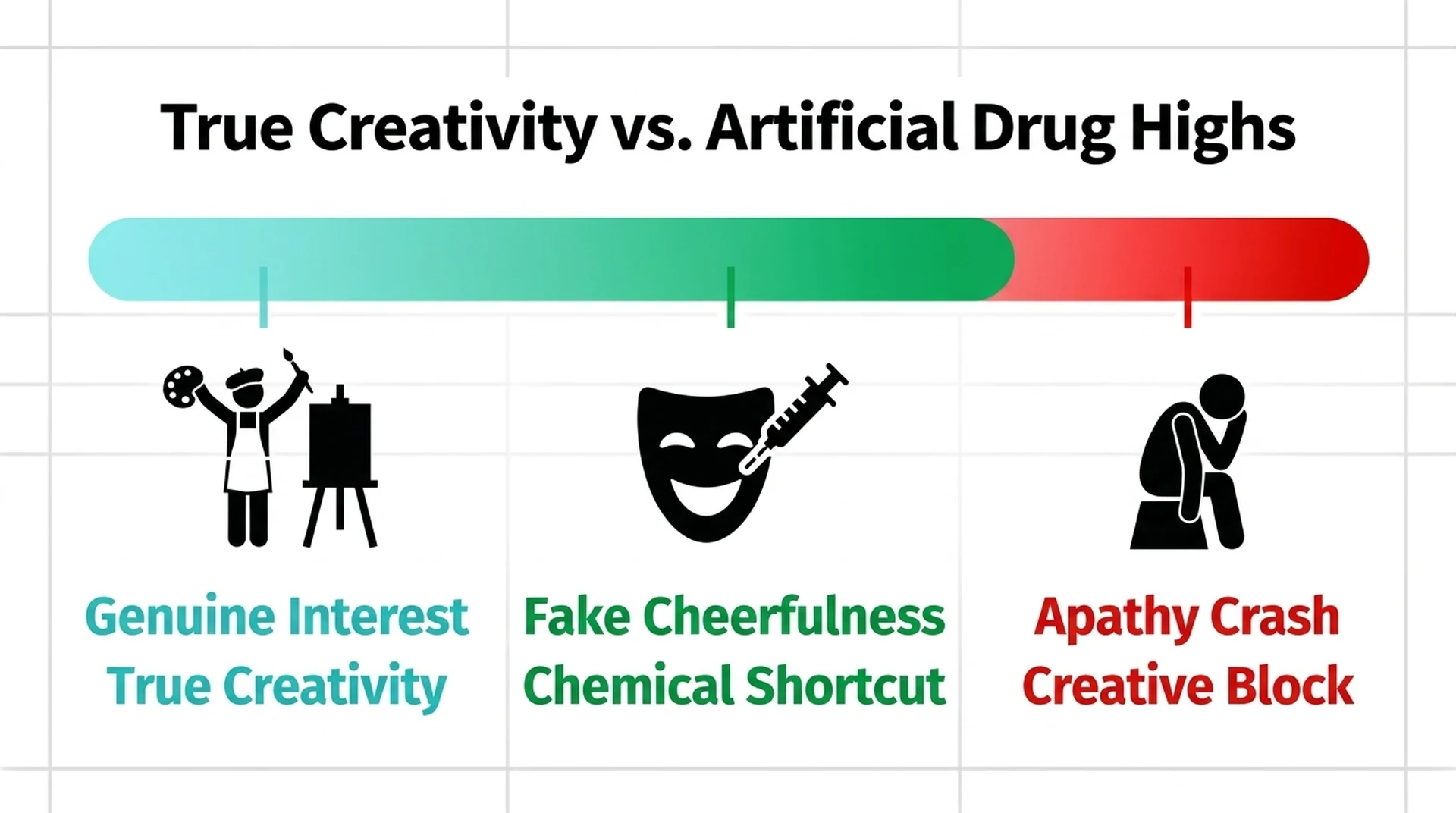
Myth: “Drugs increase creativity.” True or false? False. Music, film, and pop culture sometimes romanticize substance use as a shortcut to artistic genius. To see why drugs appear to spark ideas at first—yet steadily destroy an artist’s creative output—it helps to look at the natural scale of human emotions.
Understanding the Scale of Emotions
In Episode 8, we trace how human emotions rise step-by-step from complete shutdown at the bottom to vibrant creative energy at the top:
- Apathy (Bottom): Total lack of care—“Who cares? Nothing matters anyway.”
- Grief: Sadness, heaviness, and feeling defeated.
- Fear: Anxiety and avoidance, often visible when someone’s eyes dart away rather than holding calm eye contact.
- Covert Hostility: Hidden resentment—smiling politely on the surface while harboring sharp, critical thoughts underneath.
- Anger: Open, unmistakable hostility and outburst.
- Boredom: Above anger and fear, yet still flat and uninspired—“I don’t know, nothing much going on.”
- Interest: Genuine engagement, clear eye contact, active listening, and curiosity.
- Cheerfulness: Upbeat, positive momentum ready to build and collaborate.
- Enthusiasm (Top): High, natural, constructive energy aimed at getting meaningful things done.
Fake Cheerfulness and the Crash to Apathy
Suppose someone is stuck in boredom and takes a drug or smokes cannabis. Suddenly they start laughing, talking fast, or feeling artificially lifted into cheerfulness or enthusiasm.
Why is that called fake cheerfulness? Look at where they land as soon as the chemical wears off: they plunge down toward apathy—like the flat, unmotivated fog of a hangover—before slowly climbing partway back up, settling slightly more bored and depleted than before.
What Real Creativity Actually Requires
True creativity is not a random hallucination; it is the ability to conceive something new and follow through to bring it into existence. Doing that consistently requires staying naturally in interest, cheerfulness, and enthusiasm—genuinely curious about life, craft, and people.
Drugs promise instant creative energy, borrow it against your body’s reserves, and ultimately leave the artist less interested and less productive than when they started.
Otros recursos
- 🎬 Watch all animated episodes: Videoteca Narconon.
- 🎬 Watch more animated myth-busters: Videoteca Narconon.
- 🌍 Learn more about drug rehabilitation and prevention at Narconon Europa.
10 Things Your Friends May Not Know About Drugs: Complete Series
- Part 1: What is a Drug?
- Part 2: What Are the Effects of Drugs on the Mind?
- Part 3: Why Do People Take Drugs?
- Part 4: What Is Addiction? Why Most Drugs Are Habit-Forming
- Part 5: Is Alcohol a Drug? How Alcohol Works on the Body
- Part 6: Is Marijuana Harmful? The Hidden Magnesium Trap
- Part 7: Is Ecstasy Safer Than Other Drugs? The Truth About MDMA
- Part 8: Do Drugs Increase Creativity? Emotions vs. Artificial Highs (Current Episode)
- Part 9: Do Drugs Improve Your Senses? How the Nervous System Reacts
- Part 10: How Long Do Drugs Stay in the Body? Fat-Soluble Residues Explained
PREGUNTAS FRECUENTES
Q1: Do drugs genuinely increase artistic creativity?
No. While substances can alter perception momentarily, they deplete energy and lower a person’s chronic emotional tone, reducing real creative output over time.
Q2: What emotional states drive real creativity?
Sustained interest, cheerfulness, and natural enthusiasm allow a person to observe clearly, practice their craft, and finish original work.
Q3: What is meant by fake cheerfulness from drugs?
Fake cheerfulness is an artificial, chemically forced mood spike that collapses into apathy or fatigue as soon as the drug wears off.
Q4: Where does boredom sit on the emotional scale?
Boredom sits above apathy, fear, and anger, just below genuine interest—which is why bored individuals are often tempted by artificial chemical stimulation.
Q5: How does repeated drug use affect motivation over time?
Each crash leaves the person returning to a slightly lower chronic emotional baseline, making natural curiosity and creative drive harder to sustain.