 Danish
 English
 Czech
 Finnish
 French
 Greek
 German
 Italian
 Norwegian
 Romanian
 Spanish
10 Things Your Friends May Not Know About Drugs (Part 7)
Myth: “Ecstasy is safer than other drugs, especially if it is pure MDMA.” True or false? False. In nightlife and home settings alike, a persistent rumor claims that ecstasy is only dangerous when dealers cut it with heroin or speed—and that “pure MDMA” is safe. Both chemistry and physiology tell a very different story.
What the “MA” in MDMA Actually Stands For
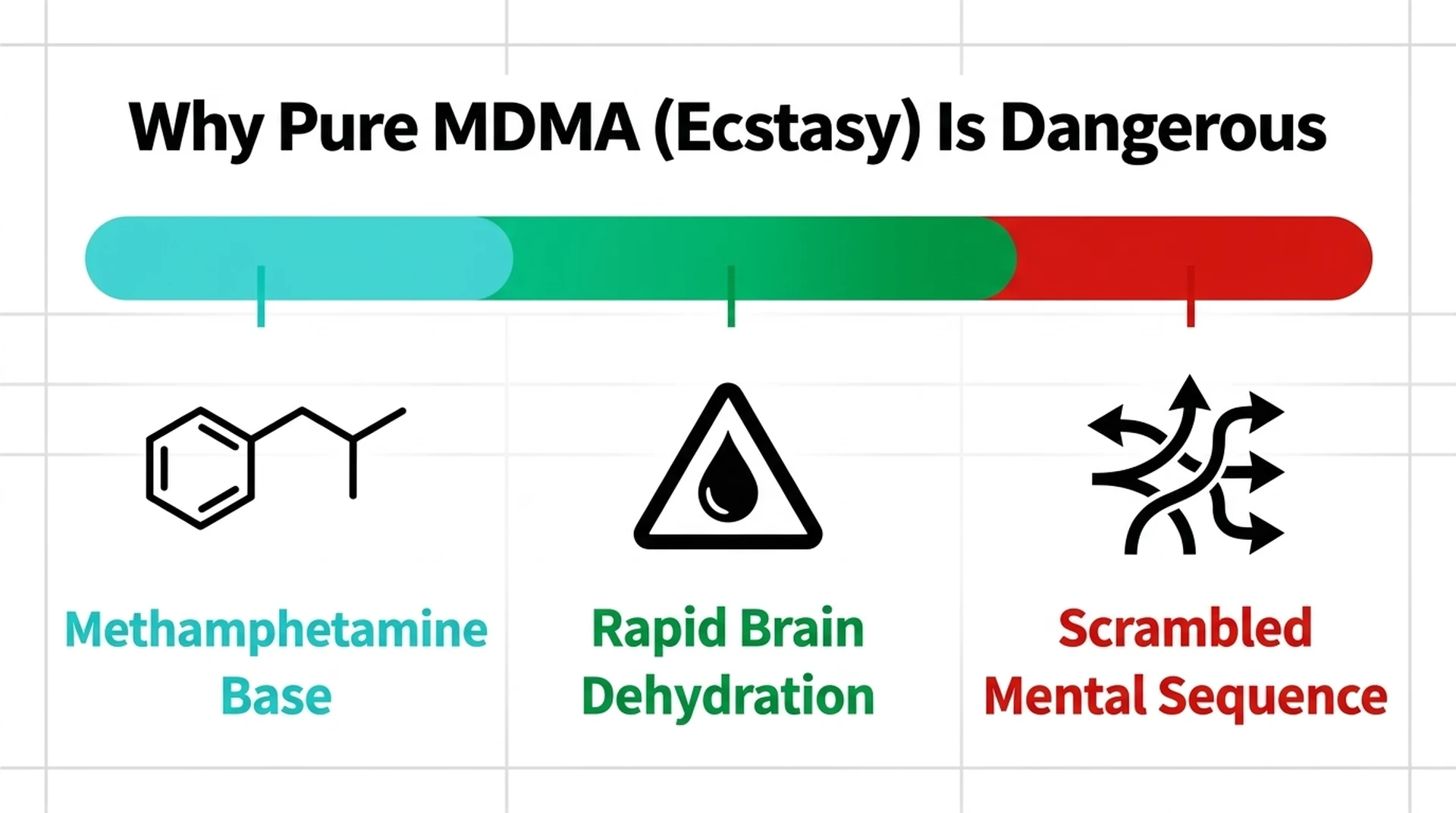
First, look at the chemical name itself: MDMA stands for 3,4-methylenedioxymethamphetamine. The MA literally stands for methamphetamine, chemically combined with hallucinogenic modifiers.
Even before any street adulterants enter the picture, MDMA places intense stimulant strain on cardiovascular and neurological systems.
Extreme Body and Brain Dehydration
Second, MDMA dehydrates the human body and brain faster than almost any common club drug. Anyone who has seen people on ecstasy notices them constantly clutching water bottles and trying to stay hydrated.
Combined with elevated body temperature, heart rate, and hours of physical exertion, rapid fluid and electrolyte disruption can trigger overheating, severe brain stress, and even acute heart failure in young, otherwise healthy users.
- Methamphetamine stimulant load: Drives heart rate, blood pressure, and body heat sharply upward.
- Rapid dehydration: Drains fluid balance across vital organs and brain tissue.
- Unpredictable pills and powders: Street tablets frequently add synthetic cathinones, methamphetamine, or fentanyl on top of MDMA’s own toxicity.
How Hallucinogens Scramble Your Mental Timeline
Finally, MDMA carries hallucinogenic properties that affect memory differently than alcohol or sedatives. While depressant drugs blur mental pictures, hallucinogenic compounds scramble the sequence of mental pictures.
Instead of memories staying neatly filed in chronological order, chunks of sensory experience get thrown out of sequence—like tangled spaghetti without clear time tabs. That scrambled timeline explains the disorientation, emotional crashes, and memory confusion many users report after MDMA use.
Yderligere ressourcer
- 🎬 Watch all animated episodes: Narconons videobibliotek.
- 💊 Detailed MDMA prevention guide: Ecstasy: What You Need to Know.
- 🌍 Learn more about drug rehabilitation and prevention at Narconon Europa.
10 Things Your Friends May Not Know About Drugs: Complete Series
- Part 1: What is a Drug?
- Part 2: What Are the Effects of Drugs on the Mind?
- Part 3: Why Do People Take Drugs?
- Part 4: What Is Addiction? Why Most Drugs Are Habit-Forming
- Part 5: Is Alcohol a Drug? How Alcohol Works on the Body
- Part 6: Is Marijuana Harmful? The Hidden Magnesium Trap
- Part 7: Is Ecstasy Safer Than Other Drugs? The Truth About MDMA (Current Episode)
- Part 8: Do Drugs Increase Creativity? Emotions vs. Artificial Highs
- Part 9: Do Drugs Improve Your Senses? How the Nervous System Reacts
- Part 10: How Long Do Drugs Stay in the Body? Fat-Soluble Residues Explained
OFTE STILLEDE SPØRGSMÅL
Q1: Is pure, uncut MDMA safe to take?
No. Even pure MDMA is a methamphetamine-based compound that causes rapid overheating, brain and body dehydration, cardiovascular strain, and neurological disruption.
Q2: What does the MA in MDMA stand for?
The MA in MDMA stands for methamphetamine (methylenedioxymethamphetamine).
Q3: Why do people on ecstasy constantly drink water?
MDMA disrupts temperature regulation and rapidly dehydrates the body and brain, creating extreme thirst and dangerous overheating risks.
Q4: How does ecstasy affect memory differently than alcohol?
Whereas alcohol blurs mental recordings, MDMA’s hallucinogenic action scrambles the chronological sequence of mental impressions.
Q5: Can someone suffer heart failure from ecstasy?
Yes. Severe overheating, dehydration, and stimulant stress from MDMA have caused fatal cardiovascular emergencies even in young users.