 English
 Czech
 Danish
 Finnish
 French
 Greek
 German
 Italian
 Norwegian
 Romanian
 Spanish
10 Things Your Friends May Not Know About Drugs (Part 9)
Myth: “Drugs improve your senses and help you experience more.” True or false? False. People sometimes claim music sounds richer, colors look brighter, or touch feels heightened on certain substances. A quick look at your body’s wiring shows what drugs actually do to sensory perception.
Your Body’s Communication Highway
Branching down from the base of your brain into every corner of your body is your central nervous system. Its job is clean, instant communication.
If your finger touches a hot stove, a signal flashes up that nerve network to your brain in milliseconds so you pull your hand back before getting badly burned. That same communication network powers every single sense you possess:
- Sight and visual sharpness
- Hearing and balance
- Smell and taste
- Touch, warmth, and physical awareness
How Drugs Relieve Pain: Cutting Off the Line
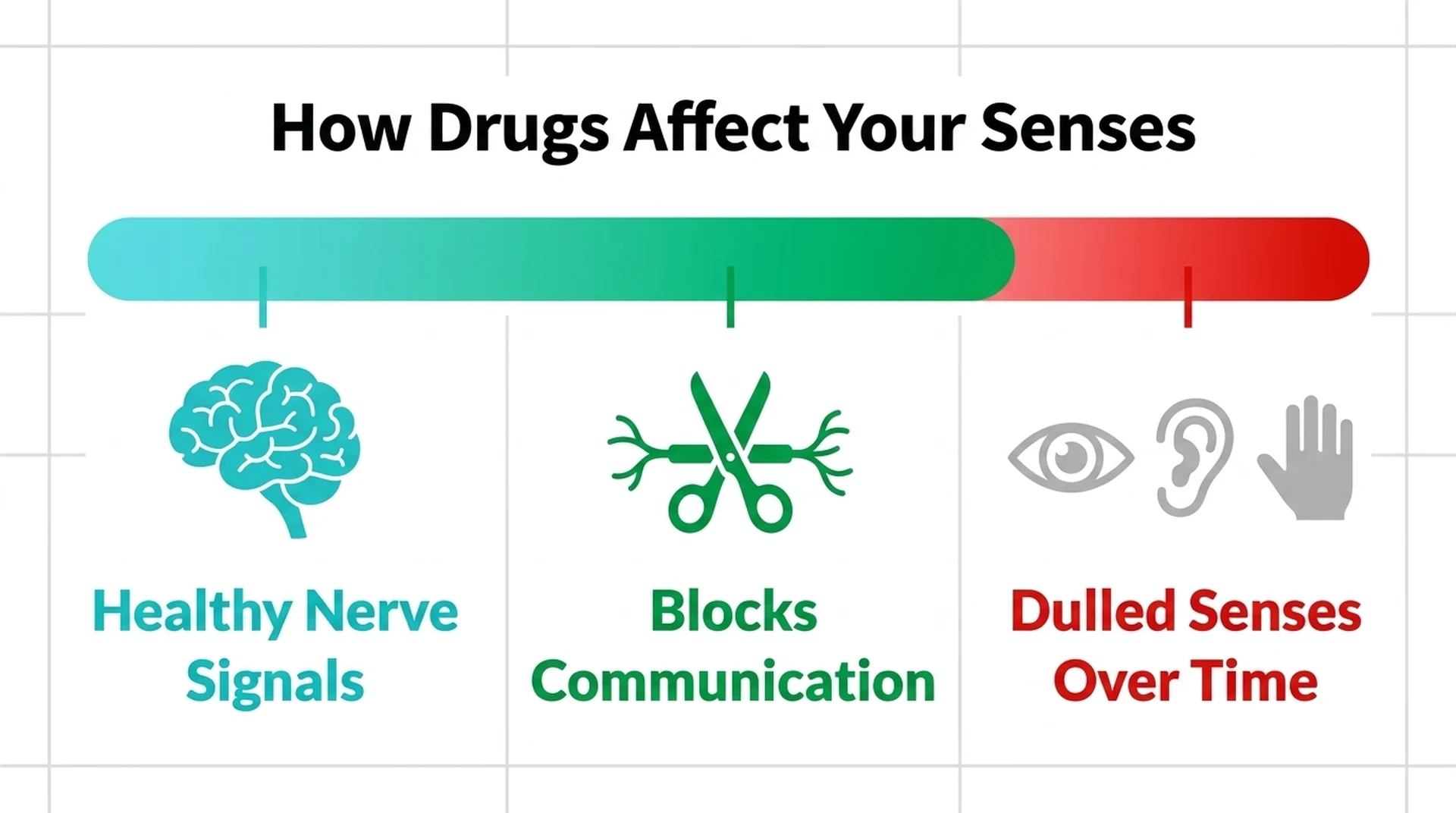
Why does a painkiller stop a toothache, or why does a sedative make tension disappear? Most drugs produce relief by blocking, damping, or cutting off communication along the central nervous system.
In genuine medical emergencies—such as surgery or acute trauma—temporarily blocking pain signals can be necessary. When used recreationally or habitually, however, you are repeatedly shutting down your body’s sensory communication lines.
Progressive Numbing of Every Sense
Because you only have one nervous system connecting your brain to your eyes, ears, nose, and skin, you cannot selectively numb stress without dulling everything else over time.
Distorting a signal is not the same as improving it—just like static on a speaker is not higher audio quality. The more frequently a person uses drugs, the more cut off and muted their natural senses become, until life without chemicals starts to feel gray and distant.
Further Resources
- 🎬 Watch all animated episodes: Narconon Video Library.
- 📘 Learn about prescription drug safety: Prescription Drugs: What You Need to Know.
- 🌍 Learn more about drug rehabilitation and prevention at Narconon Europe.
10 Things Your Friends May Not Know About Drugs: Complete Series
- Part 1: What is a Drug?
- Part 2: What Are the Effects of Drugs on the Mind?
- Part 3: Why Do People Take Drugs?
- Part 4: What Is Addiction? Why Most Drugs Are Habit-Forming
- Part 5: Is Alcohol a Drug? How Alcohol Works on the Body
- Part 6: Is Marijuana Harmful? The Hidden Magnesium Trap
- Part 7: Is Ecstasy Safer Than Other Drugs? The Truth About MDMA
- Part 8: Do Drugs Increase Creativity? Emotions vs. Artificial Highs
- Part 9: Do Drugs Improve Your Senses? How the Nervous System Reacts (Current Episode)
- Part 10: How Long Do Drugs Stay in the Body? Fat-Soluble Residues Explained
FAQ
Q1: Do drugs heighten or improve human senses?
No. Drugs distort or block nerve signals rather than improving sensory accuracy, and repeated use progressively dulls sight, smell, taste, hearing, and touch.
Q2: How does the central nervous system control the senses?
Branching from the brain throughout the body, the central nervous system carries every incoming sensory message and outgoing physical response.
Q3: How do drugs stop pain or create relaxation?
They interrupt or dampen the smooth flow of electrical and chemical messages along nerve pathways.
Q4: Why do colors or sounds sometimes seem intense on hallucinogens?
Signal distortion scrambles normal filtering in the brain, creating sensory confusion rather than sharper perception.
Q5: Can natural sensory clarity return when someone becomes drug-free?
Supporting the body with proper nutrition, rest, and complete detoxification helps restore clearer physical and mental awareness.